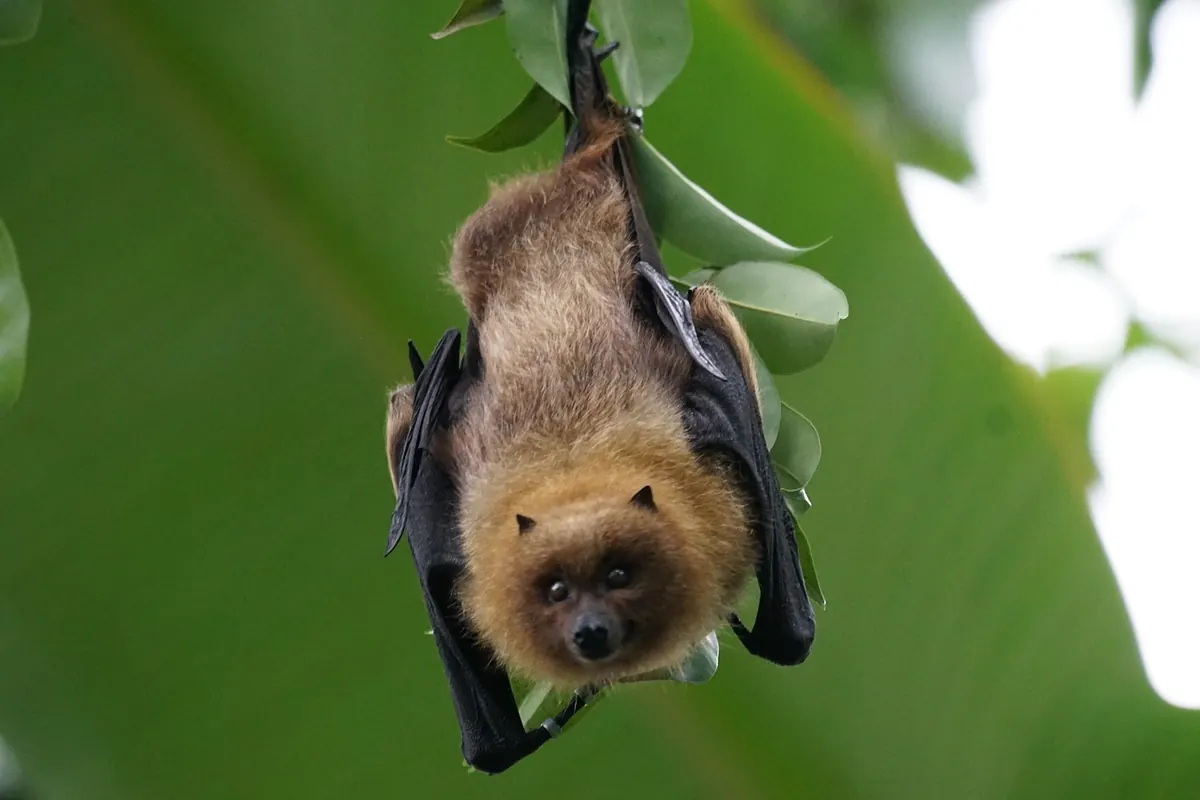
The first bat of the evening is usually a pipistrelle — a scrap of fur small enough to hide behind your thumb, flicking in tight circles over a hedge while the streetlights are still coming on. Most people see bats long before they identify them, and that is how it should be. Identifying them is a habit you build over a season, not a test you pass. What follows covers the species you are most likely to meet, how echolocation works in practice, what to carry, and the rules that shape how you watch.
Bats follow the insects, and insects follow the weather. A warm, still, dry evening after a muggy day will almost always beat a cold, windy one. Rain keeps bats in; a stiff breeze pushes them into sheltered hedgerows and woodland edges. The best nights often come right after a front has passed through — the air feels soft, the midges are up, and the bats know it before you do.
Arrive twenty minutes before sunset and stay put. On a good June evening the first pipistrelles appear within about half an hour of sunset, sometimes sooner. Noctules can be out earlier still, hunting high while the sky is pale. Daubenton's bats often feed low over rivers and canals well after dark.
The season matters as much as the hour. In April and early May you are watching animals that have just come out of torpor, thin on energy and easy to miss — a single bat at dusk feels like an event. By late June and July, when females are nursing pups, activity peaks and one garden hedge can hold half a dozen pipistrelles. August brings the young bats into the air and a second, noisier flush of activity. From September the swarming season begins around roosts, and by November the sky belongs to the owls again.
Stand away from the roost exit rather than underneath it. If you find a gap where bats are squeezing out of a roof, watch from a distance, keep white light off it, and do not gather a crowd.
Silhouettes are unreliable at dusk, but movement is not. The way a bat flies tells you a great deal before you hear a single call.
Watch the same patch for a fortnight and you will start recognising individuals — the one that always turns at the corner of the shed, the one that patrols the lamp post, the one that ignores both. That is the moment the hobby becomes genuinely absorbing.
A bat calls, listens for the echo, and builds a picture from it. Most British species call somewhere between roughly 20 and 80 kHz, far above anything we can hear. The call is not a single noise but a rapid sequence: a slow, loud search phase while the bat travels, shortening and speeding up as it closes on prey. That final burst is the feeding buzz, and once you have heard it you will never mistake it for anything else.
A bat detector simply makes the inaudible audible. Heterodyne detectors turn calls into a rough ticking or smacking tone, tuned like a radio; you listen for the change in pitch as a bat passes overhead. Frequency-division models let you hear everything at once but flatten the detail. Time-expansion detectors record calls for later analysis, which is what surveyors use when a record needs to stand up.
What you are actually listening for:
Learn the pipistrelle first. Everything else in Britain is a variation on that sound — and a good many of them will turn out to be pipistrelles anyway.
You need less than you think. Most first evenings go wrong because someone brought too much and stayed too short a time.
Leave behind the nets, ladders, drones, spotlights and the urge to investigate a roost. If you think you have found one, note the location and report it through the proper channels. Do not poke about.
Every British bat species is protected by law. It is an offence to disturb a bat, to damage or block a roost, or to handle a bat without a licence — even if you mean well, and even if the bat looks like it needs help.
In practice this comes down to a short list:
None of this spoils the hobby. Everything described in this article can be done with your hands in your pockets.
Pick one spot you can walk to — a garden hedge, a canal bridge, a churchyard at the edge of a village — and visit it once a week from April to September. Record the time of the first bat, the direction it came from, the height it flew, and the weather. Within a month you will have a rough baseline for what is normal there. Within a season you will be able to spot the nights that matter: the muggy evenings after rain, the first week the noctules appear, the sudden quiet in October.
Then borrow a detector, sit down on something comfortable, and listen.
Photo: Pixel-mixer / Pixabay