A heap of rotting logs in the corner of a garden looks like nothing much. Underneath, though, it can be a nursery. Stag beetle larvae spend years inside dead wood, chewing slowly through timber that is damp, soft at the edges and touching soil. Build the right kind of pile in the right place and you give Britain's largest beetle somewhere to complete a life cycle that takes far longer than most of us realise.
It takes an afternoon of work, a few logs and a good deal of patience — mostly patience, because very little happens quickly.
Stag beetle larvae do not eat dry firewood. They need timber that is decaying in contact with the ground, where it stays moist and where fungi and invertebrates are already breaking it down. A female lays her eggs in crevices in the wood or in the soil just beneath it. The larvae that hatch feed on the soft, decaying material, growing slowly over several years before pupating in the ground nearby.
Adults are short-lived. They emerge in late spring and early summer, live for only a few weeks and do not eat wood at all; they take tree sap and honeydew. Males fly at dusk on warm evenings, antlers forward, searching for females. Females are larger, browner and usually found walking on the ground. Neither will harm you.
Sightings are concentrated in southern England, particularly London and the south-east, with scattered records elsewhere. Even if you are outside the usual range, a log pile is worth building: plenty of other dead-wood species will make use of it.
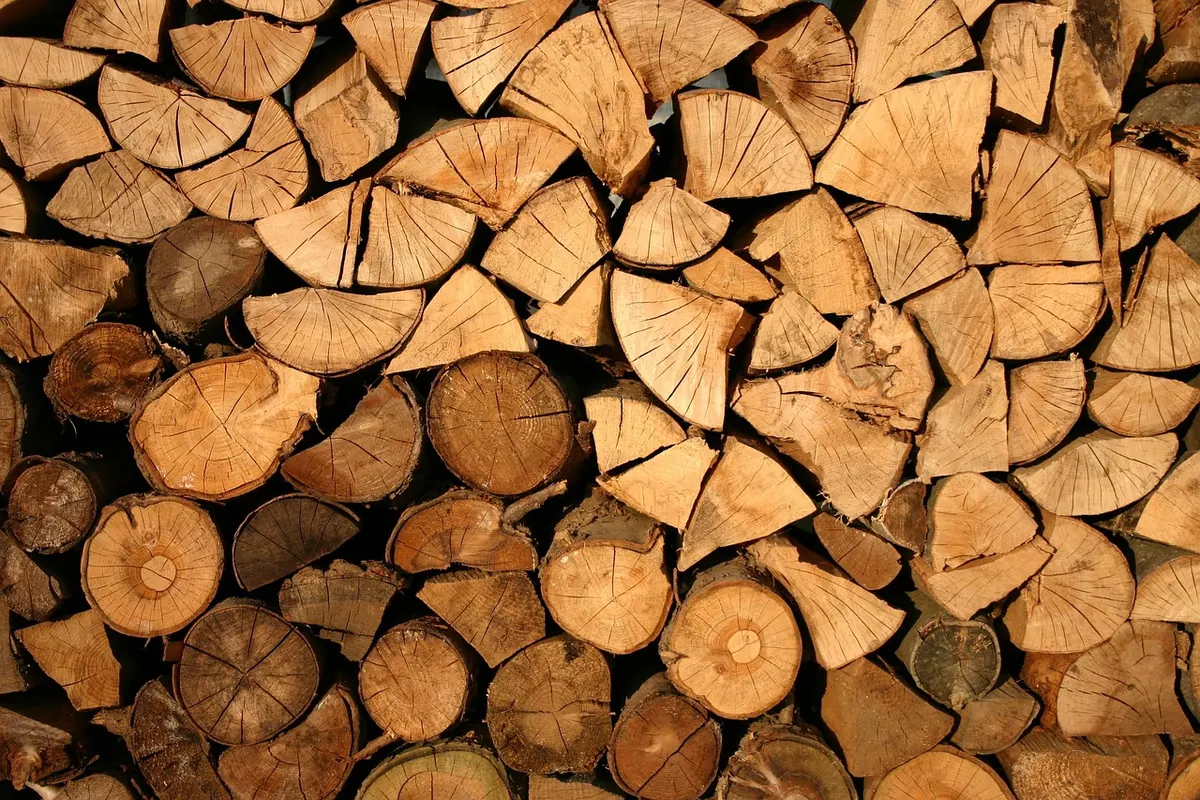
The wood you use matters more than the size of the pile. Broadleaf timber is what you want, ideally in chunky lengths rather than thin branches.
One more thing: if you have a tree stump, leave it in the ground. Cutting it low and burying a few logs around it makes an ideal starting point.
Contact with the ground is the single most important factor. A log resting on a paved patio or on top of gravel will not work; a log half sunk into soil will.
Aim for a spot that gets sun for part of the day but never dries out completely. A south- or west-facing edge of a border is usually ideal, particularly near a hedge, fence or shrub that gives shelter and holds a little warmth into the evening. Deep shade under a dense canopy stays too cold and wet. Full sun on light, sandy soil bakes dry and defeats the purpose.
Most soils are fine. On heavy clay, choose ground that drains rather than a hollow where water sits. Nestled beside a path or patio is no bad thing either — warm surfaces radiate heat back after sunset, when males are on the wing.
Once it is built, the best thing you can do is ignore it. Larvae take several years to develop, so a pile that is moved or turned over every spring is a pile that keeps starting again.
Leave it through autumn and winter. Do not add grass clippings, kitchen scraps or manure; these heat up, turn sour and can suffocate the wood. Do not burn it — check any bonfire heap before lighting it. Ivy and brambles growing over one side are fine, as long as some sun still reaches the pile.
In a long dry spell, a light watering around the base helps keep the wood damp. Otherwise, resist the urge to tidy. Slow worms, frogs, hedgehogs, overwintering ladybirds and solitary bees all use log piles, so fork nothing over between autumn and spring.
Stag beetles are active from roughly May to July, with June the peak. Warm, still evenings just before dark are the best time to look.
Records are not busywork. They feed into local wildlife surveys and can influence how planning decisions affect known populations. A single confirmed sighting from a garden can matter.
If you find one on a pavement, there is no need to panic. They are harmless. Let it walk onto your hand or slide a piece of card beneath it and move it somewhere safe and green.
You do not need a woodland to do this. Three or four decent logs, partly sunk into soil in a sunny border, is a genuine contribution. Get the basics right — broadleaf wood, ground contact, some warmth, no disturbance — and then step back and let it rot. Check on warm evenings in early summer, and record what you find.
Photo: Pexels / Pixabay