March is the month the garden changes its mind. One week the soil is warm enough to work with bare hands; the next, a sharp frost has sealed the surface and there is ice around the edges of the pond. That unpredictability is what makes March sowing so satisfying when you read it correctly, and so frustrating when you rush it. What follows is a working guide: what to sow straight into the ground, what to start under cover, and how to protect the lot when the temperature drops.
Dates on seed packets are a rough guide, written for an average year that rarely turns up. The soil is a better judge. Hardy annuals germinate once the ground has lost its winter chill, and the surest sign is usually the weeds: when chickweed and hairy bittercress start appearing in your beds, conditions are broadly right for cornfield flowers and other tough natives.
On heavy clay, be patient. Pick up a handful and squeeze it. If it holds its shape and glistens, it is still too wet to work, and walking on it now will compact it for the rest of the year. Wait for a crumbly texture, then tread lightly and work from a plank if you can.
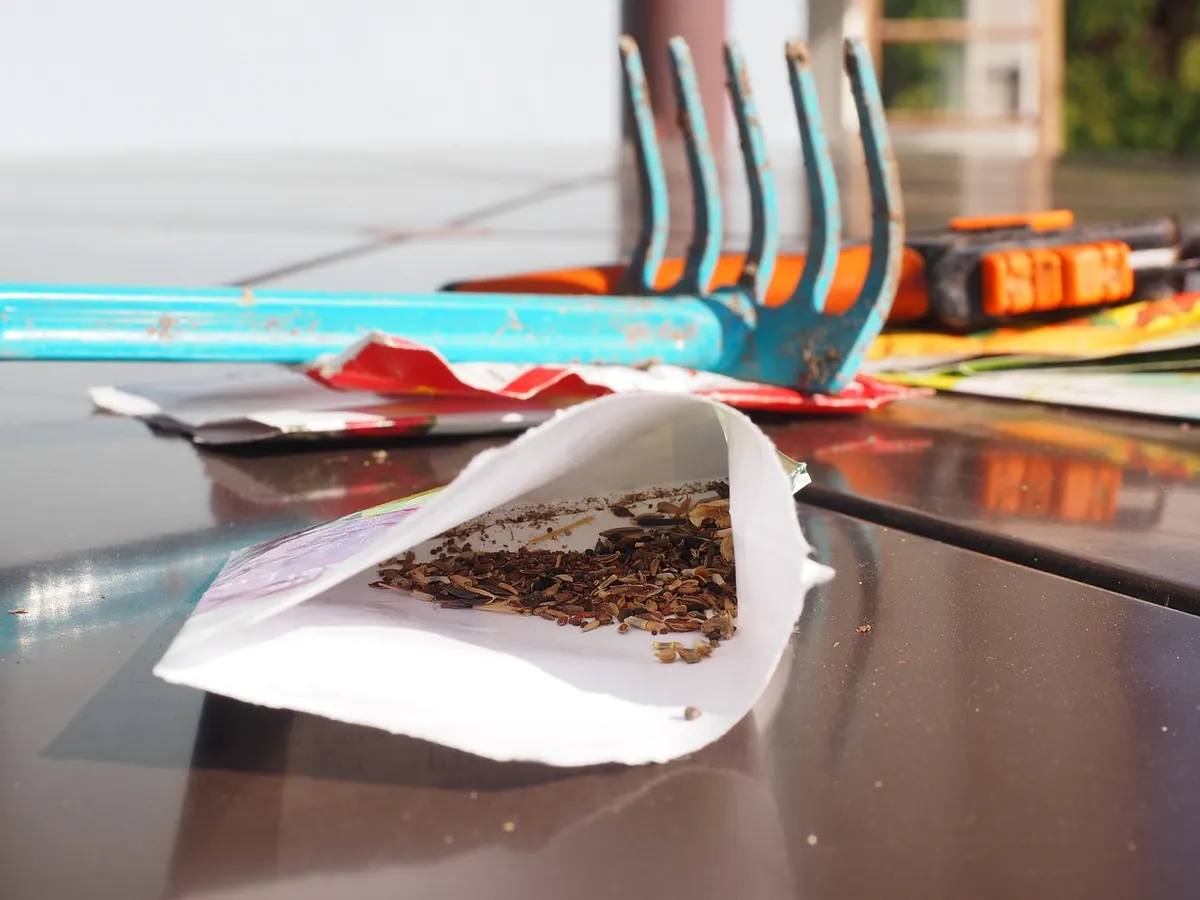
If you have a patch of bare, sunny ground — a stripped border, a gap in the lawn, or a strip along a wall — March is a good moment for cornfield annuals. Cornflower, corn marigold, corn poppy and corncockle all want disturbed soil and no competition. Rake the surface to a fine tilth, scatter thinly, rake again so the seed is barely covered, and firm with the back of the rake. Water if the month turns dry.
Perennial meadow species will germinate from a March sowing, though results are patchier than an autumn sowing. Oxeye daisy, common knapweed, field scabious, selfheal, yarrow, bird's-foot trefoil, red clover and wild marjoram form the reliable backbone of a UK meadow mix. Most of them need light to germinate, so press the seed into the surface and dust with a thin layer of sand or compost rather than burying it.
A note on sourcing: look for seed described as British native origin or UK provenance. Cheap mixes often contain non-native species that offer less to our insects, and a few contain plants that spread aggressively.
March is the month for getting ahead indoors without pretending it is summer. A cold frame, a warm windowsill or a small unheated greenhouse will do. Sow cosmos, sunflowers and calendula in modules — cheap, generous with nectar and easy to grow on. Borage and poached egg plant (Limnanthes douglasii) can go straight into the ground in milder areas, and both will be feeding bees by early summer.
Zinnias and other tender annuals need warmth, roughly 18–21°C, so only start them if you have somewhere consistently warm to keep them. Otherwise wait until April. Hardy perennials such as foxglove, teasel, hyssop and betony can be sown in modules in a cold frame now and planted out in autumn once they have sized up.
Use seed compost rather than multipurpose. Seedlings have no need of the nutrients, and richer compost can encourage weak, leggy growth and damping off.
No native sowing guide is complete without it. Yellow rattle is semi-parasitic on grass roots, thinning the grass and opening space for wildflowers. Autumn is the classic sowing window, because the seed needs a period of cold to germinate, but a March sowing onto short, open grass during a cold spell can still work. Sow thinly, rake lightly and firm. After it flowers in early summer, hold off mowing until the seed has set and dropped — usually by late July.
Late frosts are the main risk this month, and their timing varies enormously. Some coastal and western gardens are largely clear by April, while inland and northern gardens can see frost into late May, and exposed sites even later. Assume nothing and keep protection to hand.
Do not plant out anything tender, however tempting a warm spell feels. In most of the UK that wait lasts until mid-May at the earliest.
Sowing is only half of it. The wildlife value of a March garden comes as much from what you do not do. Leave the seed heads on last year's perennials, because goldfinches and tits will work through them, and leave leaf litter and log piles undisturbed — hedgehogs, frogs and queen bumblebees may still be sheltering there.
Keep a note of what you sowed and where. A few lines in a notebook — date, plant, patch — will tell you next March what germinated well in your soil and what quietly failed. That record, built over two or three years, will be worth more to you than any general guide, including this one.
Photo: Hans / Pixabay